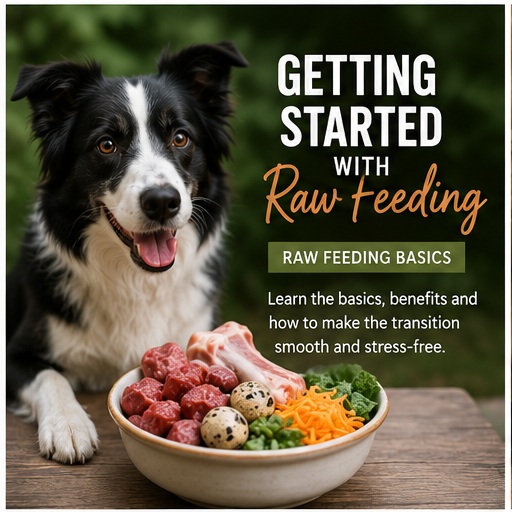
Raw feeding has become increasingly popular with dog owners who want more control over what goes into their dog’s bowl. But when you first start looking into it, the amount of information available can feel overwhelming.
A balanced raw diet is more than simply feeding raw meat. Dogs need a suitable combination of protein, edible bone, organs, fats and other nutrients to support long-term health.
Before making changes, it is important to consider your dog’s age, breed, activity level, body condition and any existing health concerns. A growing puppy will have different requirements from an adult dog, and a senior dog may also need a more carefully tailored approach.
One of the biggest mistakes beginners make is trying to make every single meal “perfect”. It is often more practical to think about nutritional balance across an appropriate feeding period.
Some dogs move onto raw food very easily, while others benefit from a slower transition. If your dog has a sensitive digestive system, a gradual change can often make things easier.
The goal is not to follow a generic formula blindly. The best raw feeding plan is one that works for your individual dog.